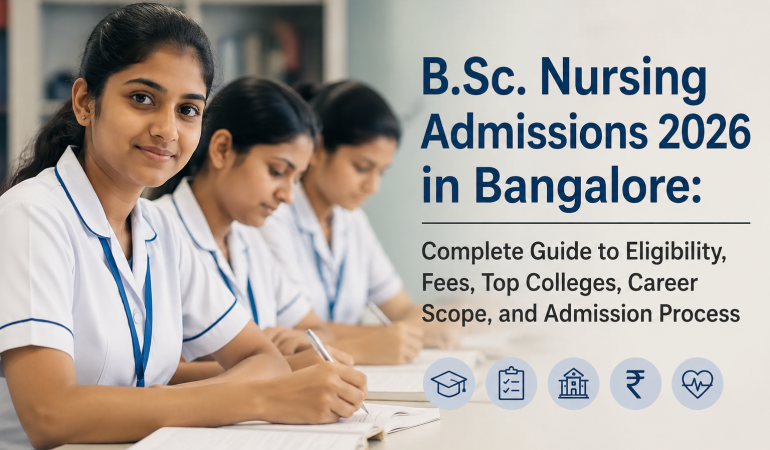
B.Sc. Nursing Admissions 2026 in Bangalore: Complete Guide to Eligibility, Fees, Top Colleges, Career Scope, and Admission Process
The healthcare industry is expanding rapidly, creating an increasing demand for skilled nurses both in India and abroad. If you are planning to pursue B.Sc. Nursing in Bangalore, 2026 is an excellent time to begin your journey toward a rewarding healthcare career.
Bangalore has become one of India’s preferred destinations for nursing education because of its advanced hospitals, quality institutions, experienced faculty, clinical exposure, and excellent placement opportunities.
In this comprehensive guide, you’ll learn everything about:
- B.Sc. Nursing Admission 2026
- Eligibility
- Admission Process
- Course Fees
- Career Opportunities
- Scholarships
- Salary
- Frequently Asked Questions
Why Choose Bangalore for B.Sc. Nursing?
Bangalore is known as India’s healthcare hub.
Students benefit from:
- Multi-specialty hospitals
- Extensive clinical training.
- Experienced nursing faculty.
- Modern simulation laboratories.
- Internship opportunities.
- Excellent placement support.
Many hospitals recruit directly from reputed nursing colleges in Bangalore, making it easier for students to begin their careers immediately after graduation.
What is BSc Nursing?
A Bachelor of Science in Nursing (B.Sc Nursing) is a four-year undergraduate degree designed to prepare students for professional nursing practice.
The curriculum combines:
- Anatomy
- Physiology
- Nutrition
- Medical-Surgical Nursing
- Community Health Nursing
- Child Health Nursing
- Mental Health Nursing
- Obstetrics & Gynecology
- Clinical Practice
- Research
- Patient Care
Students gain both theoretical knowledge and practical hospital exposure.
B.Sc. Nursing Admission 2026 Eligibility
Most colleges require applicants to have:
Educational Qualifications
Passed 10+2 (PUC)
- Physics
- Chemistry
- Biology
- English
Minimum Marks
- 45–50% aggregate
Minimum age:
- 17 years
Documents Required for Admission
Keep these documents ready:
- 10th Mark Sheet
- 12th Marks Card
- Transfer Certificate
- Migration Certificate (if applicable)
- Study Certificate
- Aadhaar Card
- Passport-Size Photographs
- Income Certificate (Scholarship)
- Caste Certificate (if applicable)
B.Sc Nursing Admission Process 2026
The admission process generally involves:
Step 1
Submit your application.
Step 2
Upload the required documents.
Step 3
Document verification.
Step 4
Admission confirmation.
Step 5
Fee payment.
Step 6
College reporting.
Applying early improves your chances of securing your preferred institution.
How much does B.Sc. Nursing cost in Bangalore?
Fees vary depending on the institution.
They typically include:
- Tuition Fee
- Laboratory Fee
- Clinical Training
- University Fees
- Examination Fee
- Hostel Fee
Many colleges also provide scholarships and instalment payment options for eligible students.
Career Opportunities after B.Sc Nursing
A B.Sc. Nursing degree opens doors to diverse healthcare roles.
- Staff Nurse
- ICU Nurse
- Operating Theatre Nurse
- Emergency Nurses
- Community Health Nurse
- Pediatric Nurse
- Nurse Educator
- Clinical Instructor
- Research Nurse
- Public Health Officer
Highest Paying Countries for Nurses
Indian nurses are in demand worldwide.
Popular destinations include:
- The United Kingdom
- Germany
- Australia
- Canada
- Ireland
- New Zealand
- Gulf Countries
With experience and licensing, nurses can build rewarding international careers.
Expected Salary after B.Sc. Nursing
Freshers may earn competitive salaries depending on the employer, location, and role. As experience, specialization, and qualifications grow, compensation also increases significantly. International opportunities often provide substantially higher earning potential.
Skills Every Nursing Student Should Develop
Successful nurses combine knowledge with essential professional skills, including:
- Patient Care
- Communication
- Critical Thinking
- Compassion
- Teamwork
- Emergency Response
- Leadership
- Clinical Decision-Making
- Time Management
- Ethical Practice
Why Choose Aditya College of Nursing?
Choosing the right institution is one of the most important decisions for your nursing career.
Aditya College of Nursing, Bengaluru, offers:
- Experienced Faculty
- Advanced Nursing Laboratories
- Clinical Training in Multi-Specialty Hospitals
- Modern campus infrastructure
- Skill Development Programs
- Placement Assistance
- Holistic Student Development
- A Supportive Learning Environment
Students receive academic guidance along with practical exposure to prepare them for successful healthcare careers.
Frequently Asked Questions
Is NEET required for B.Sc. Nursing?
Admission requirements vary by institution and applicable regulations. Check the latest admission guidelines for your chosen college.
How many years is B.Sc Nursing?
The course duration is 4 years.
Can I work abroad after B.Sc Nursing?
Yes. After meeting the destination country’s licensing and registration requirements, graduates can pursue opportunities in many countries.
Is Nursing a good career in 2026?
Yes. Healthcare demand continues to grow, making nursing one of the most stable and respected professions.
What are the best career options after B.Sc Nursing?
Graduates can work in hospitals, clinics, community health, education, research, government healthcare, and international healthcare systems.
Apply for B.Sc Nursing Admissions 2026
If you’re planning to build a rewarding career in healthcare, now is the ideal time to begin your admission process.
Take the first step toward becoming a skilled nursing professional with quality education, clinical exposure, and career-focused training.